
Overview
ILVE Professional Plus ovens are designed with high-performance heating systems, manual control interfaces, and integrated safety mechanisms to regulate temperature and protect internal components.
If the oven shuts off during operation, this is typically not random failure. In most cases, mid-cycle shutdown is caused by overheating protection, airflow restriction, unstable power supply, or a mechanical component interrupting operation.
Unlike fully digital systems, Professional Plus ovens rely more heavily on thermal regulation and mechanical safety cutoffs, meaning shutdown is often a protective response rather than a control error.
This guide outlines the most common causes and how to determine whether the issue is operational, environmental, or requires service.
Common Causes
If the oven display and controls operate normally but the oven does not heat, the issue is typically related to one of the following:
- Overheating due to restricted airflow
- Safety thermostat (thermal cutoff) activation
- Cooling fan malfunction or insufficient ventilation
- Unstable or incomplete electrical supply (electric/double ovens)
- Ignition interruption (gas models)
- Temperature control or thermostat inconsistency
- Internal component overheating due to installation conditions
Operational Note
Professional Plus ovens rely on thermal regulation and mechanical safety cutoffs to protect internal components.
If excessive heat or restricted airflow is detected, the oven may shut down as a protective response.
A one-time shutdown may be related to operating or installation conditions. Repeated shutdown is not normal and should be addressed.
Troubleshooting Tip
Review the troubleshooting chart on the following page before contacting service.| Possible Cause | What To Do |
|---|---|
| Airflow obstruction | Remove trays, foil, or items blocking vents. |
| Cooling fan not operating | Listen for fan; service if not functioning. |
| Overheating in large cavity | Allow unit to cool and retest. |
| Improper rack placement | Adjust racks to allow proper airflow. |
| Electrical instability | Confirm full 220–240V supply. |
| Sensor or control issue | Escalate to service. |
| Gas ignition interruption | Observe flame consistency. |
Step 1: Check for overheating & airflow restriction
Professional Plus ovens rely on proper airflow to regulate internal temperature. Restricted airflow can cause overheating and trigger a shutdown.
Steps:
- Remove any foil, trays, or cookware blocking vents
- Reposition racks to allow proper airflow
- Avoid overloading the oven cavity
Retest the oven.
Step 2: Confirm cooling fan operation
Cooling fans regulate internal temperatures and prevent overheating. If the fan is not operating properly, the oven may shut down mid-cycle.
Steps:
- Start the oven and listen for cooling fan operation
- Confirm consistent airflow during operation
If the fan is not running, operates irregularly, or produces abnormal noise, service is required.
Step 3: Evaluate cooking conditions
High temperatures, heavy loads, or frequent door openings can disrupt heat balance and cause shutdown.
Steps:
- Test under standard conditions (350°F / 175°C, Convection mode)
- Avoid opening the oven door repeatedly
- Reduce oven load to allow proper airflow
Step 5: Reset the oven power
A reset can clear minor control or sensor inconsistencies.
Steps:
- Turn OFF the circuit breaker
- Wait at least 2 minutes
- Turn the breaker back ON
Then test the oven:
- Cooking mode: Convection / Fan
- Temperature: 350°F (175°C)
Step 6: Confirm electrical supply
ILVE ranges require a 220–240 volt supply for proper heating performance. If the oven is receiving partial power:- Heating may be reduced or inconsistent
- Heating may stop unexpectedly
- Display or controls may reset or shut off
- Breaker if fully ON
- No partial trip has occurred
- Unit is connected to 220-240V supply
Electrical Requirements & Tips
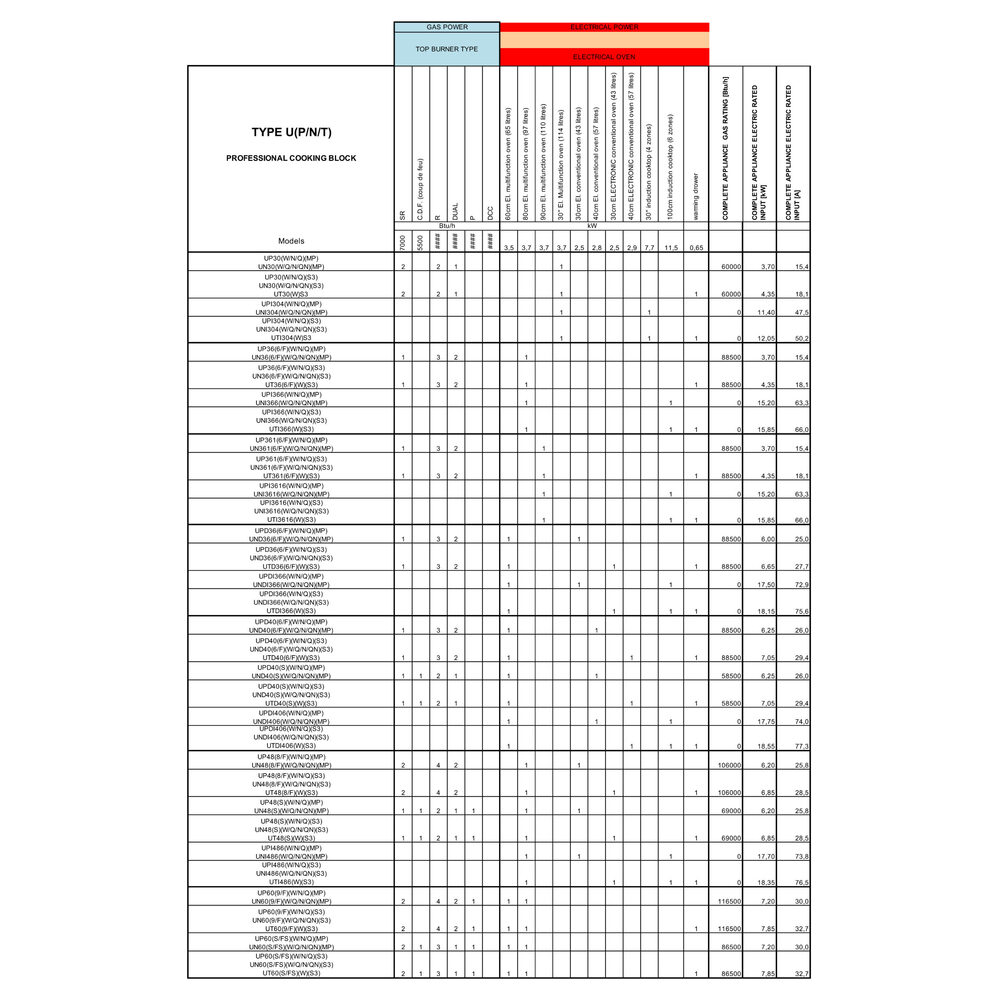
- Circuit amperage varies by model and size — refer to the series-specific power tables at the end of this guide.
- If the range receives 120V instead of 240V, the display and lights may function, but the oven will not heat properly.
- If electrical supply is uncertain, consult a qualified electrician.
Step 6: Identify oven behavior
| Situation | Issue | Possible Causes |
|---|---|---|
| A | Oven shuts off completely | Likely electrical supply issue |
| B | Oven remains on, but stops heating | Likely overheating or safety cutoff |
| C | Shuts off when oven is full or heavily loaded | Likely airflow restriction inside cavity |
| D | Shuts off at higher temperatures only | Likely cooling or ventilation issue |
| E | Gas flame drops during cooking (gas models only) | Likely igniter or gas supply issue |
Step 7: Gas vs electric considerations
| Gas Oven Cavities | Electric / Dual-Fuel Oven Cavities |
|---|---|
|
Flame should ignite and remain stable (cycling is normal). If the flame:
→ Possible igniter or gas supply issue |
Elements cycle to maintain temperature; the oven should not shut down. If shutdown occurs:
|
Step 8: Allow full cooldown and retest
If the oven shut down due to heat buildup, allow it to cool completely before restarting.
Steps:
- Allow the oven to fully cool
- Restart under standard conditions
- Test again
If the issue repeats, it may indicate an airflow, cooling, or component-related issue.
When to contact service
If the oven does not heat after completing these steps, the problem may involve:
- Cooling fan malfunction
- Airflow system imbalance
- Temperature sensor failure
- Control board issue
- Electrical supply instability
- Igniter or gas valve issue
These components require inspection by a qualified service technician.
Contact ILVE USA Customer Service to schedule service.
