
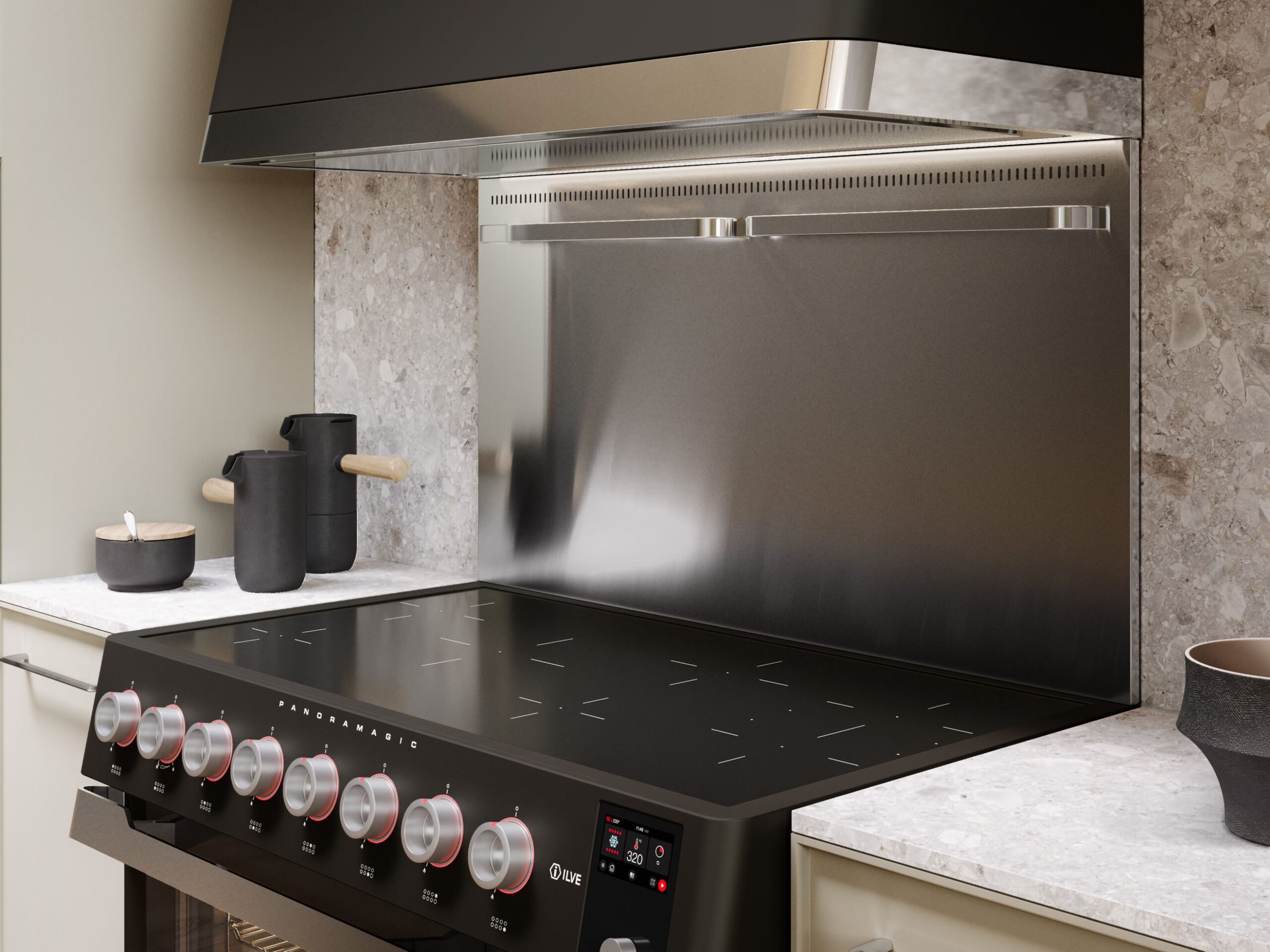
Overview
ILVE Panoramagic ovens feature a large-capacity cavity with advanced convection airflow and TFT-controlled cooking system, designed for fast, even heat distribution.
Because of this high-performance design, external surfaces (door, control panel, surrounding areas) can become noticeably warm or hot during operation, especially at higher temperatures or longer cook times.
The unit also includes a safety thermostat that will shut the oven down if internal temperatures exceed safe limits.
This guide helps determine whether the heat is normal or related to airflow, installation, or thermal protection.
Common Causes
If the oven exterior becomes excessively hot, the issue is typically related to:
- High-efficiency convection airflow
- Large oven cavity retaining heat
- Extended or high-temperature cooking
- Restricted ventilation or blocked vents
- Improper installation clearances
- Heat buildup around cabinetry
- Poor room ventilation
Operational Note
Panoramagic ovens are designed for strong airflow and efficient heat retention, which can:
- Cook faster than traditional ovens
- Feel hotter externally compared to other series
- Require slight temperature adjustments during cooking
From the manual:
- Oven vent ducts must remain unobstructed
- Airflow is critical for proper operation
Exterior heat is normal—but excessive heat is usually caused by airflow or installation conditions, not a failure.
Troubleshooting Tip
Review the troubleshooting chart on the following page before contacting service.| Possible Cause | What To Do |
|---|---|
| Exterior warm during normal use | This is normal; surfaces may become hot during operation |
| Extended high-temperature cooking | Allow oven to cool between uses if possible |
| Blocked ventilation or airflow | Ensure vents are not obstructed |
| Appliance installed too close to cabinets | Verify proper installation clearances |
| Heat trapped around appliance | Improve airflow around unit |
| Frequent door opening | Minimize door use to maintain stable heat flow |
| Surrounding surfaces retaining heat | Allow time for cooling after use |
Step 1: Confirm normal operation
Steps:
- Identify which surfaces are hot (door, sides, control area)
- Determine if oven has been running at high temperature
Important:
- Panoramagic units run hotter externally than other series due to airflow design.
Step 2: Confirm cooking mode
Steps:
- Ensure oven vents are not blocked
- Confirm airflow paths are clear
Important:
- The unit requires proper ventilation for safe operation.
Step 3: Verify installation clearance
Steps:
- Check space between oven and side cabinets/walls
- Confirm minimum 5″ side clearance above countertop
Important:
- Insufficient side clearance can trap heat and cause the exterior to overheat.
Result interpretation:
- Less than 5″ clearance → Installation issue
- Proper clearance → Continue diagnosis
Step 4: Evaluate cooking conditions
Steps:
- Check cooking temperature used
- Identify duration of operation
Result Interpretation:
- High temperature and/or long cooking time → exterior heat increase is expected behavior
- Moderate temperature and normal duration, but excessive exterior heat → not typical → continue diagnosis
Step 5: Check for heat retention around unit
Steps:
- Observe surrounding cabinets and walls
- Ensure heat is not being trapped
Step 6: Reset the oven
Steps:
- Turn OFF the circuit breaker
- Wait at least 2 minutes
- Turn the breaker back ON
- Test the oven at 350°F (175°C) using Convection / Fan mode
Step 7: Observe temperature behavior
| Situation | Issue | Possible Causes |
|---|---|---|
| A | Heat reduces with better airflow | Installation / ventilation issue |
| B | Heat increases with long cooking | Normal operation |
| C | Heat remains excessive under all conditions | Possible issue |
| D | Surrounding area very hot | Heat retention or clearance issue |
Step 8: Identify unsafe conditions
Steps:
- Exterior becomes excessively hot under normal cooking conditions
- Heat is extreme to touch quickly
- No improvement after airflow and clearance adjustments
If any of these occur:
- Turn OFF power at the breaker
- Do NOT continue use
- Contact a qualified technician
When to contact service
Service is required if:
- Exterior surfaces become excessively hot during normal use
- Heat remains unusually high after improving airflow and allowing cooling time
- Cooling fan is not operating or heat symptoms continue after retesting
Possible causes include:
- Cooling fan malfunction
- Restricted ventilation airflow
- Installation clearance issue
- Insulation or heat management issue
- Electronic control system issue
These components require inspection by a qualified service technician.
Contact ILVE USA Customer Service to schedule service.
